 Those who know me know that I can't turn down a good festival. Anything involving multiple days of food, music, cultural events and even fireworks will always be high on my list. At most festivals, one looks for an appropriate balance among the first three. You'll find all three in Valencia, but fireworks also play an enormous part.
When we refer to "Valencia", at this point you may be wondering exactly what we're referring to. "País Valencià" or "Comunitat Valenciana" refers to three provinces that make up one of Spain's autonomous communities - Alacant or Alicante, Castelló de la Plana or Castellón, and València. València is also the name of the capital city of the province and the autonomous community. In any case, fireworks factories in València number in the dozens, and when it came time to set a world record in Las Vegas, a company from València provided the spectacle.
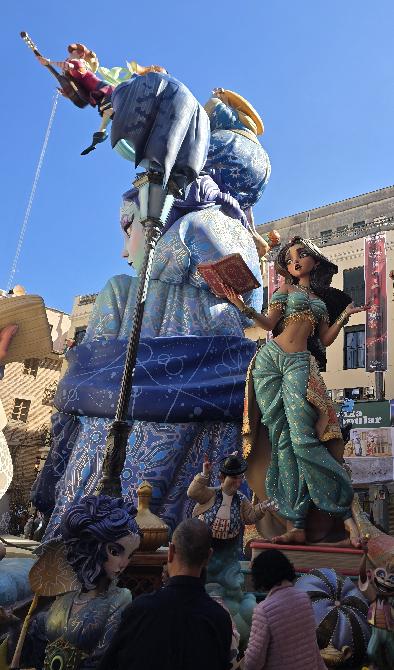
València is also where each March a festival known as Las Fallas (or in the Valencian language, Les Falles) is held. You may have already heard of the festival, having been declared Intangible Cultural Heritage by UNESCO. In medieval times the word falla simply denoted a torch, but has come to refer to the large monuments that are burned at the end of the festival. While the most famous of these celebrations are held in the capital city of València, they are also held in dozens of other towns throughout the País Valencià.
 Las Fallas are characterized by:
- Extensive use of fire, as in many celebrations across Europe, marking the changing of the seasons (in this case the equinox transition from winter to spring).
- The ritual burning of massive sculptures at the end of the festival. Originally, members of carpenters' guilds would burn leftover constructions and wood scraps, and eventually the celebration evolved to the creation of structures built from wood and other flammable materials.
- Its association with St. Joseph's Day. St. Joseph is the patron saint of carpenters, and in Spain Fathers' Day is also celebrated on March 19th. St. Joseph himself might have declared that his day would be more appropriate as Stepfathers' Day but at this point the best we can do is speculate on the matter.
- Boys and girls as young as four, carrying their own collection of firecrackers and bombetas in a little wooden box, and setting them off in squares and playgrounds all over town. If they have any trouble lighting a match and putting it to a fuse, their parents are there to step in and assist, as generations of Valencians have done.
For a celebration like this to happen a lot of work goes into planning the next occurrence. In fact as you are reading this, the many Comissions Falleres are likely working on designing and building their creation for the next year. My arrival in València was on March 12th, but a lot happened before that date.
The last Sunday of February is when the Crida takes place. The "queen" of the festival, known as the Fallera Major, speaks to a gathering of all involved at the Torres de Serrano, the gates to the city. She calls all involved to begin the festival and receives the keys to the city from the mayor of València. In spite of the massive quantities of pyrotechnics, spectacles involving dangerous bulls, cows and humans, and constant carousing in the streets of the city, children are very much involved in all aspects of Las Fallas. Since 2016 the junior version of the queen, or Fallera Major Infantil, also gives a speech of her own.
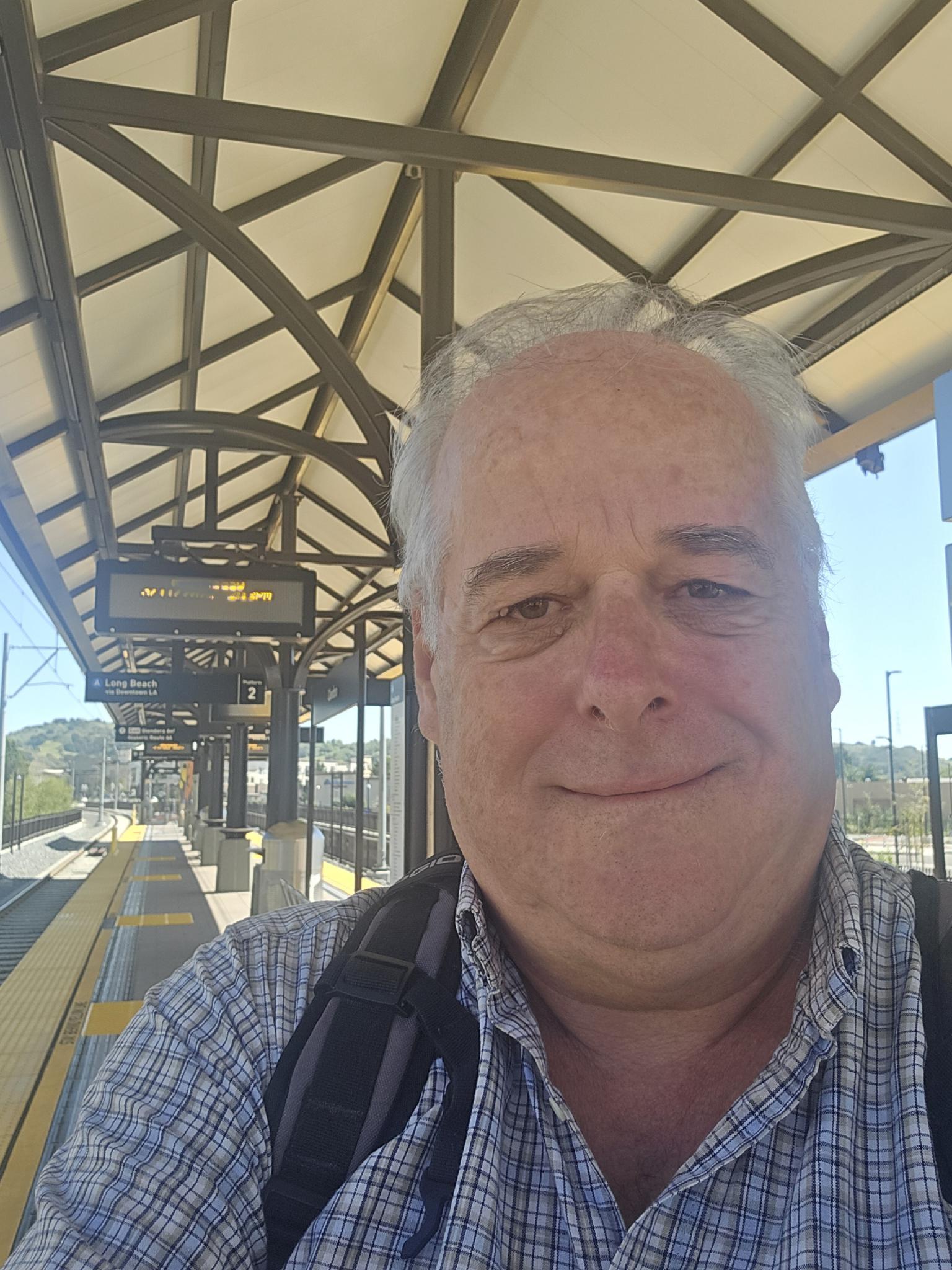 My own journey to València began on the 11th of March, when my son Mikel dropped me off at our new Metro station in Glendora. Since I am now considered to be a senior citizen by those in charge of LA's mass transit, I was able to make the 45-mile trip to the airport for the affordable price of US$0.35 - just 35 cents. Mass transit in LA gets a bad rap, but I know of nowhere else where a similar trip would cost the same amount. Three hundred of those trips would cost the same as a single trip via Uber or Lyft. I flew direct from LAX to Madrid on Iberia. At Barajas airport I caught a local train to Madrid's Chamartín railway station, where I caught an AVE train to València. In this case I decided to spring for a first-class ticket, which didn't cost much more than a coach fare, but allowed me to pick a seat in advance, and came with a nice meal, accompanied by a few glasses of cava. It was cool to see the wall-mounted speedometer reach over 300 kilometers per hour on some stretches. One advantage of train travel over taking a flight is that you end up at a more central location. In this case, I was able to walk to Mike and Ben's apartment directly from the train station.
 The first sounds I heard the next morning (13 March) were from the aptly-named despertà, a daily ritual where the fallers wake residents with firecrackers. Although the big events had not yet started, I was able to ease into celebrations with some of the activities that start taking place after the initial crida:
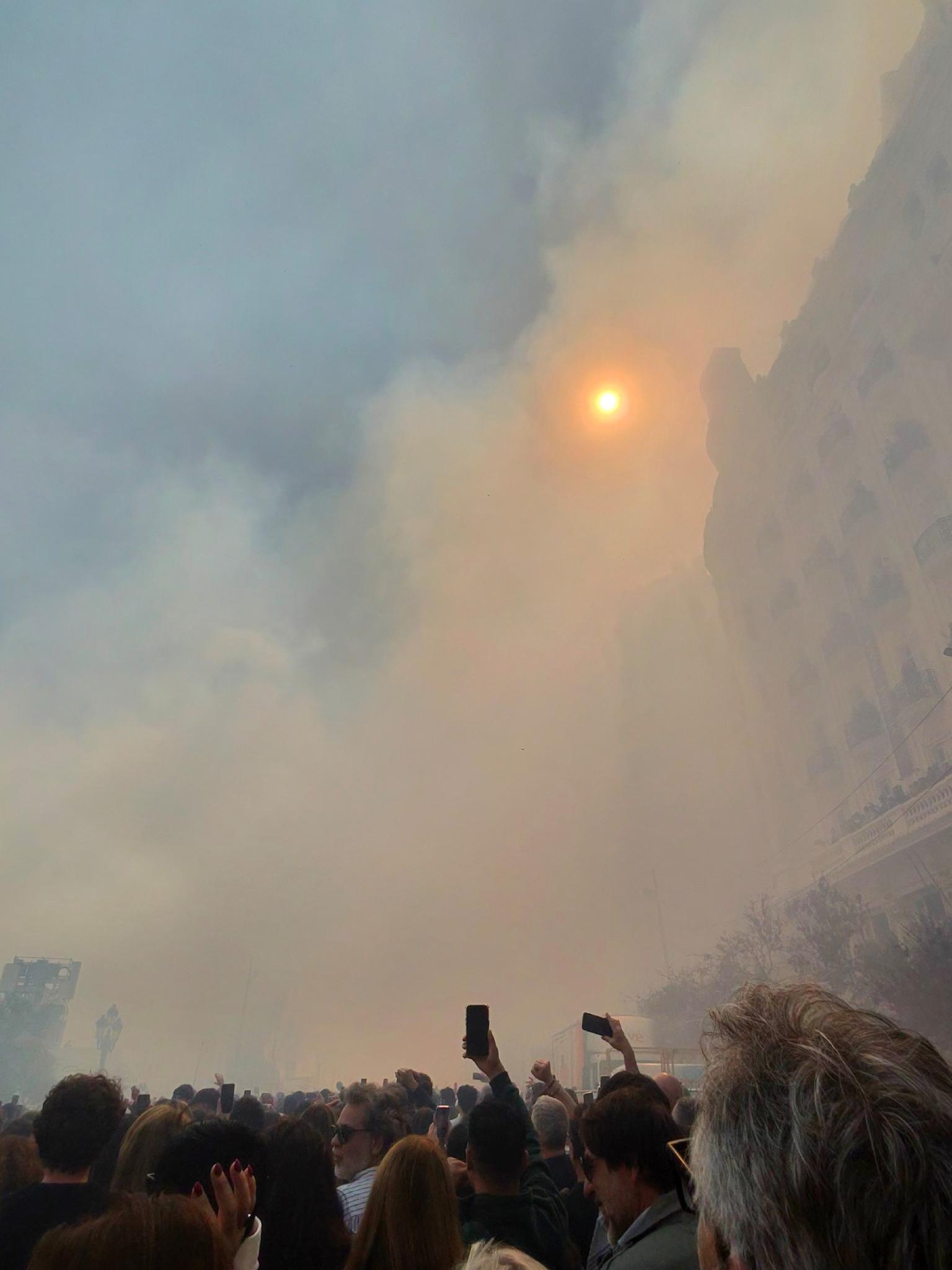
- Mascletà - a veritable symphony of explosives. I don't think there is anywhere in the world where the general public can legally get this close to such massive amounts of exploding ordnance. Since this is held during the day, it is less of a visual spectacle, but also something that goes beyond auditory, as your entire body literally vibrates to the rhythm of the controlled explosions.
- On this day, Mike and I did a bike/walking tour of Valencia, went to the Museu d'Història de València, and watched some traditional dances in front of the town hall.
- Another tradition is an exposition of ninots. This word literally means "doll", but refers to some 800 smaller sculptures, all of which make some sort of cultural, moral or political reference. They are on display at the Ciutat de les Arts i les Ciències with its characteristic architecture by Calatrava. With your paid admission, you can vote for your favorite ninot, and those that collect the most votes are spared from the fiery end that consumes the rest of the ninots along with the larger creations known as monuments (more about those later). So our activity for the 14th was to visit this exhibition. We were a bit short on time and so we didn't really get to make a full assessment of the candidates to cast a proper vote.
- The reason for our hurry was to attend the Nit de Foc (night of fire) event held at the bullring, not to be confused with the actual massive Nit de Foc fireworks display. Live bulls with flaming torches attached to their horns are released into the ring, where the younger set can try out their amateur torero skills. Unfortunately, we didn't manage to get tickets to the taurine acrobatics display happening in the morning; we'll have to get organized earlier next time.
- There is also a nightly fireworks display, happening at midnight. Being Valencia, the show is always spectacular.
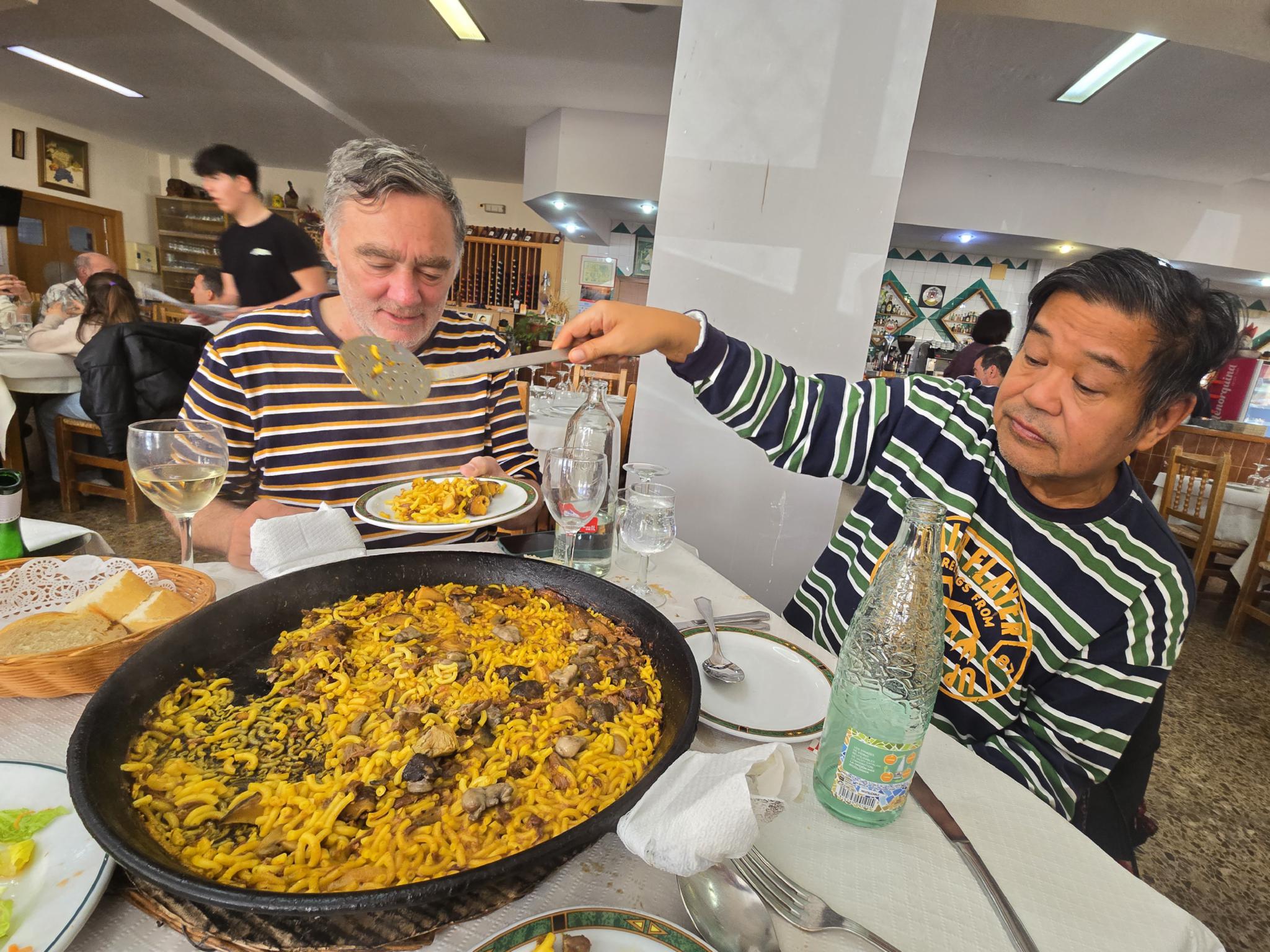 A visit with Ben and Mike is always a culinary adventure. On the 15th we took a bus out to L'Albufera, a nature park established in the area where València's famous rice is grown. We had lunch at el Redolí. Our main dish was fideuà, a local dish made in a paella pan, but instead of rice, uses some sort of pasta, sometimes what we know as macaroni, but more commonly the fideo type (think very short vermicelli) that gives the dish its name. There's no limit to the ways that this can be prepared; our version had clams and chunks of fish. Next time you're in València, I would recommend trying this alternative if you've already had the paella.
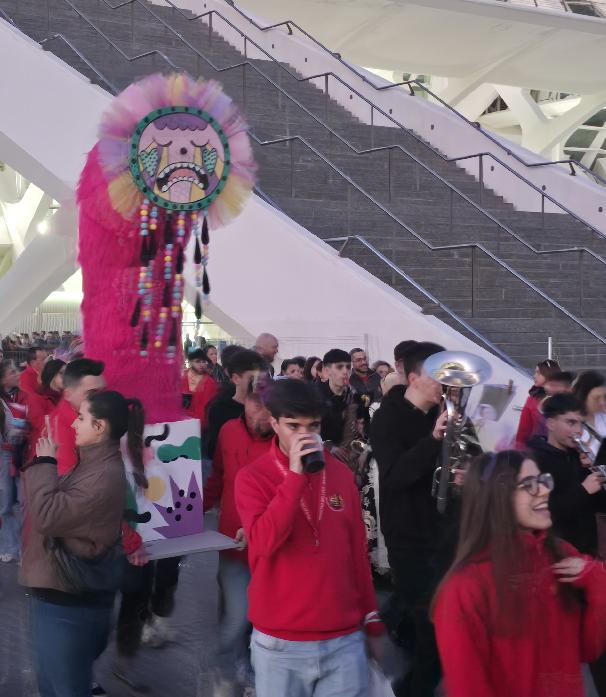 That evening the Ninot exhibit came to a close. At the closing ceremony the winning Ninot is announced, and all of the groups carry their creations back to their neighborhoods to the accompaniment of brass bands and firecrackers. It's a great celebratory atmosphere, and gives you another chance to view all of the different ninots.
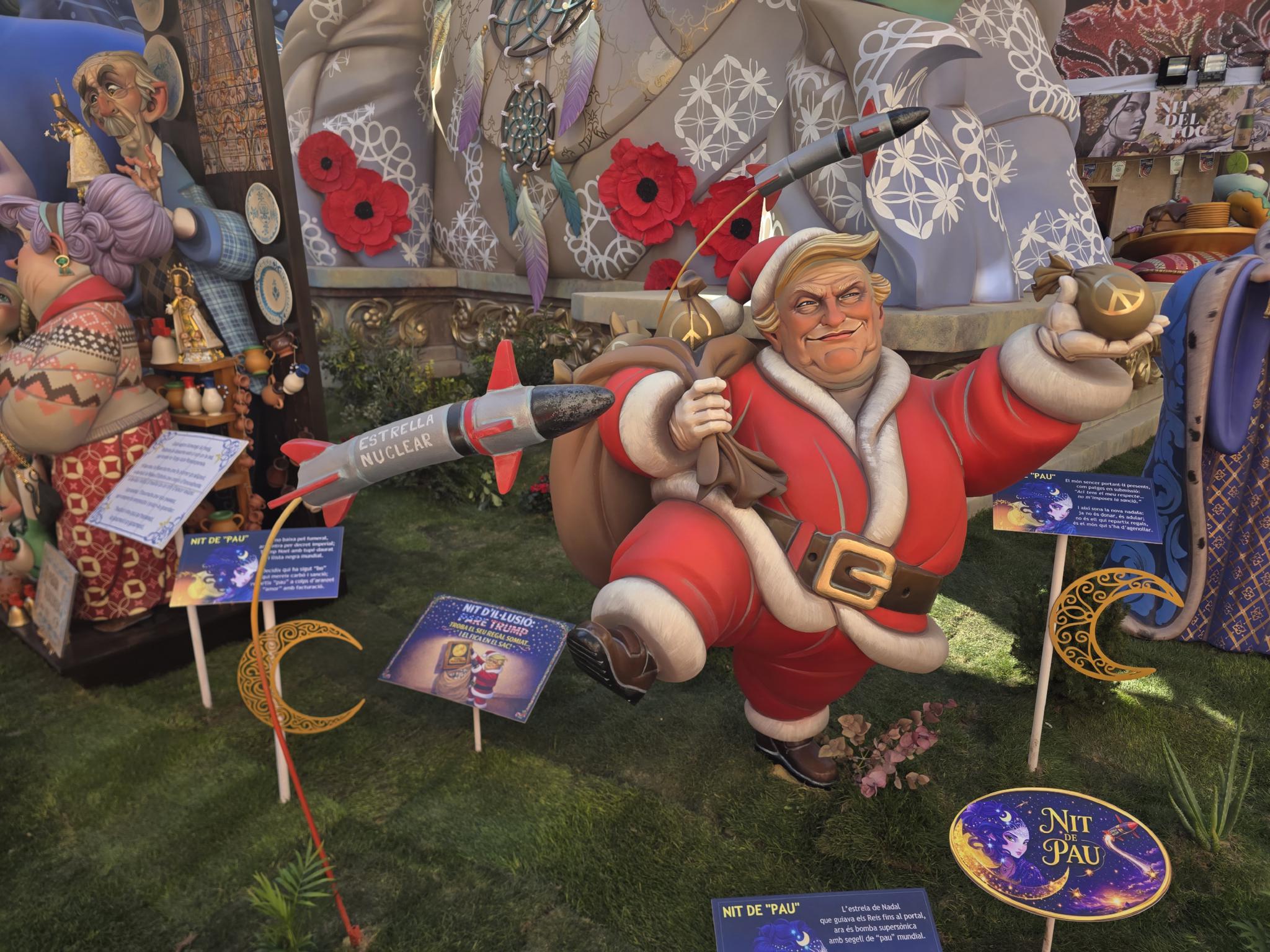 The night of the 15th to the 16th of March is when everything starts to come together. The Plantà is the placement and assembly of ninots and monuments. Participants in the festivities are known as fallers / falleras in the Valencian language. In Spanish the same word for the masculine gets an o and becomes falleros. For the purposes of organizing and creating their sculptures, the fallers belong to various clubs known as casals. From this day you can check out the constructions made by the various casals, and appreciate their artistry and messaging. In addition to the intricate sculpture and painting, the displays are complemented with stories, poetry, political commentary and humor. Each is surrounded by protective barriers, but with the purchase of a ticket book, you can get up close to each production to truly appreciate it. Ben, ever the gracious host, made sure we had our own ticket book for our grand tour. And of course being the middle of Las Fallas, the daily mascletà and nightly fireworks continued, to my personal delight.
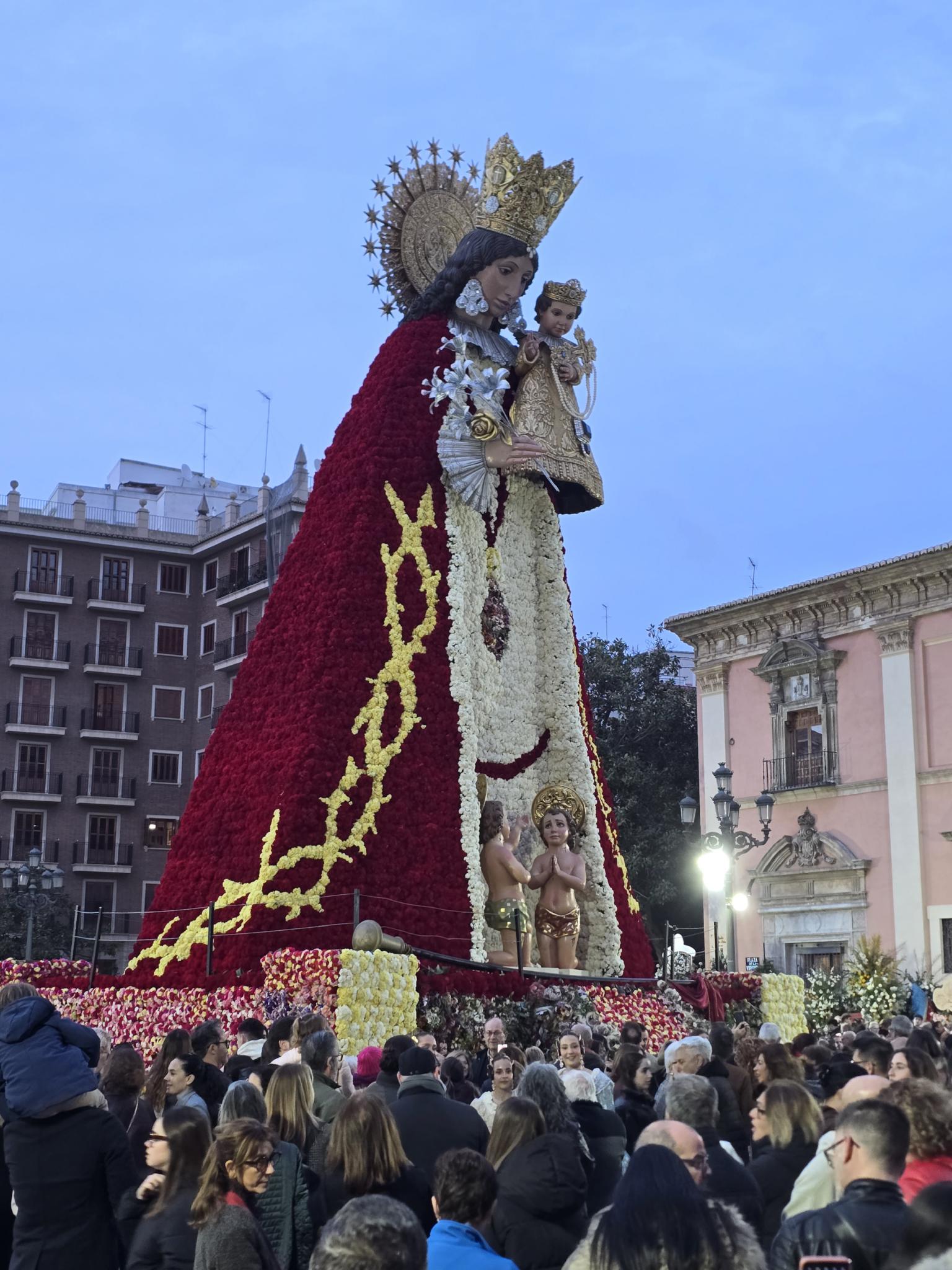
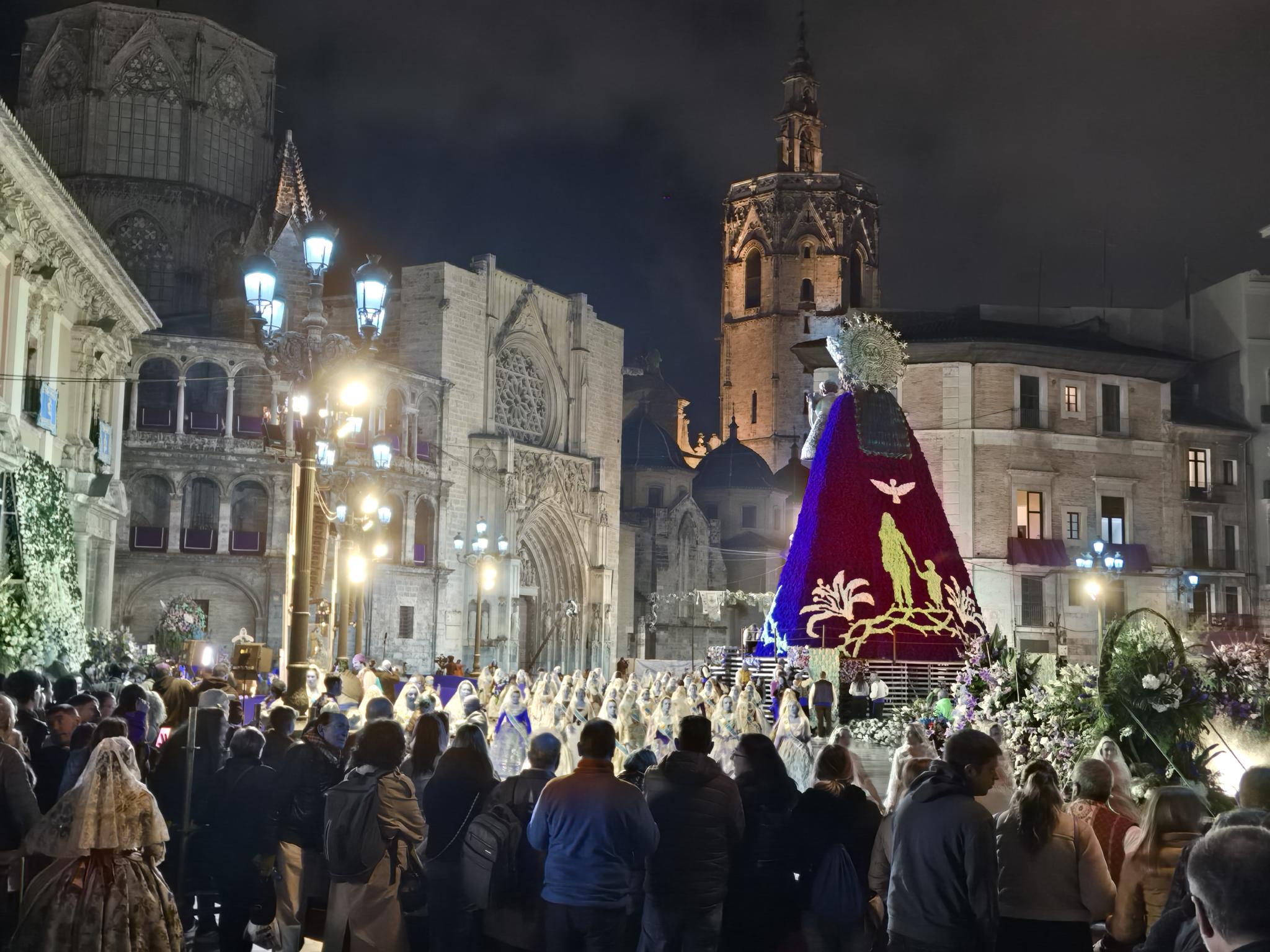 As many are aware, March 17th is the feast of Saint Patrick, patron saint of Ireland, celebrated by Irish and non-Irish around the world. We had a great lunch hosted by friends of Mike and Ben, with a really well-done home-made corned beef brisket. Over the next couple of days the offering of flowers (L'Ofrena) takes place. Long processions of Valencians in traditional dress bring flowers to a tall statue of Our Lady of the Forsaken, the patroness of València known colloquially as La Geperudeta. Many of the girls and women are participating in a tradition handed down from mothers, grandmothers and great-grandmothers, and more than a few nostalgic tears are shed as they approach the figure of La Geperudeta with their flowers, which are handed up to artisans who assemble her flowery cloak. With long lines of people from all over the País Valencià converging on the Plaça de la Mare de Déu, the processions go on well into the night on both days.
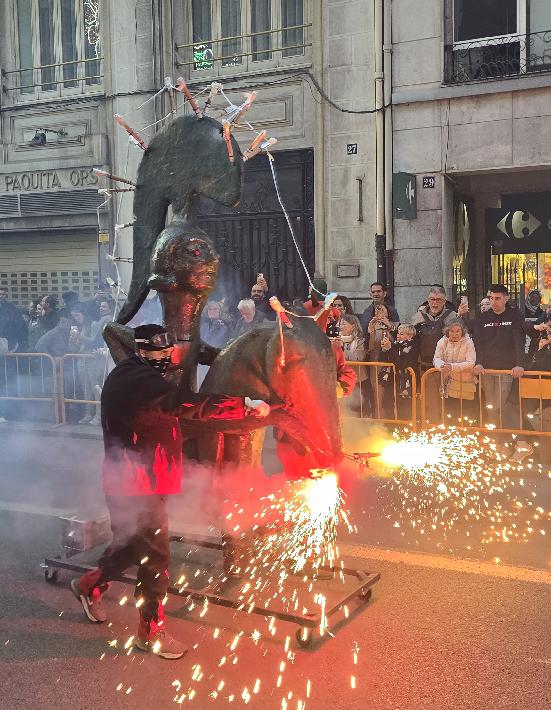 The inevitable conclusion of the festival is heralded by a crescendo of explosion and flame over the 18th and 19th. The 2-PM Mascletà is still a daily occurrence, getting more dramatic with each new presentation. On the 18th the festival's largest fireworks display takes place, involving a ton and a half of gunpowder in a 20-minute spectacular called Nit de Foc.
A more unique manifestation of fire and explosives is the correfoc, a term that describes a procession of people in various satanic costumes and floats, accompanied by (what else) firecrackers, roman candles, pinwheels, sparklers, fire breathers and an inordinate amount of flaming whistles. The visual and sonic barrage is a backdrop to a traditional and artistic street performance known as the Cabalgata del Fuego. Insider tip - try to scope out a spot for viewing before it starts, and wear clothing that you know will get a few pinhole burns from the showers of sparks raining down on performers and spectators.
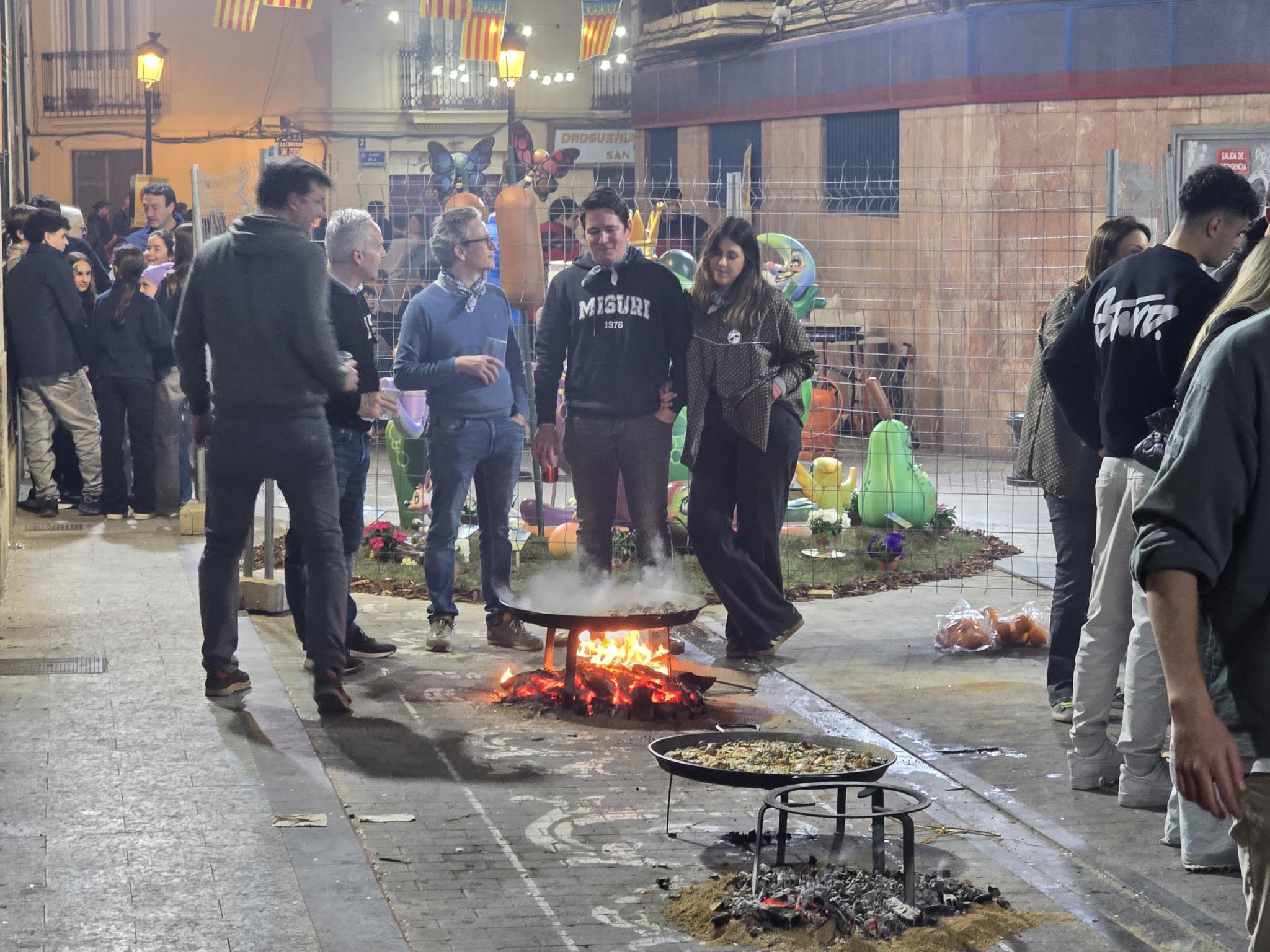 In the "how cool would it be to be a local" department, many of the city's casals have already set up a small private tent near their monument, and on the 18th many of them participate in the most famous of Valencian culinary traditions, the paella, cooked and enjoyed right out there on the street. At other times during the festival, the casals' tents serve as a place of storage, somewhere to chill away from the crowds, or a private party house to hang out and enjoy the company of your fellow fallers and falleras.
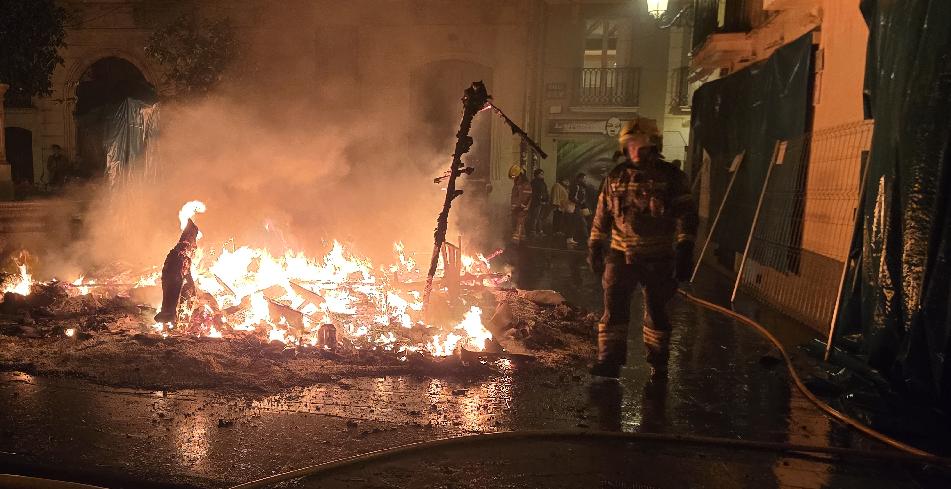 ...And the grand finale - the Cremà, the moment when the monument sculptures, so painstakingly designed, constructed, painted, transported and assembled, are set fire to, and burned to the ground. These structures are located in various streets, squares and nooks around the town, some very close to trees and residential buildings. They are not all ignited at the same time, because that would be dangerous and crazy, and of course nothing dangerous or crazy has happened at any point during the month, so why start now? I witnessed the Cremà of the falla in the Plaça del Negret, a cozy square with a small space between the fountain and an apartment block to accommodate a massive burning effigy. For places like this, experienced firefighters are on hand to make sure things don't get out of hand, proactively directing a shower on the surrounding trees, and the apartment building itself, which has had some tarpaulins hung on its façade to keep the water from entering the actual apartments. Each of the fallas in this situation will need to wait their turn from the roving fire brigade, hence the non-simultaneous fires as I mentioned before. Not knowing what to expect, I managed to position myself just where some of the blow-by from their firehoses would reach, so rather than getting showered with sparks like on so many other occasions during the week, this time I got an actual shower of water.
 The final act of the festival is the burning of the gigantic falla in front of the town hall. This year's entry was a monument to peace and hope, with a silent-movie aesthetic, with the central figure a
statue of Charlie Chaplin
reminiscent of his character in the
Shoulder Arms film. The total height was some 27 meters, nearly 90 feet tall. Many argued that the sculpture should somehow be "pardoned" and left as a statement against war, but that would go against many years of incendiary tradition. The good news is that the gesture lives on in pictures, videos, articles and the memories of those who got to see it, and each new year will bring new topics and fresh perspectives.
Final thoughts
So what's my final verdict? Would I recommend a Fallas experience to my gentle readers? Like many festivals that bring in hordes of visitors, it depends on what you like. For a man-child like me in his mid-sixties, I actually enjoy the fireworks, the late-night carousing, the souvenir burns in my clothing from flying sparks. For a big city, Valencia has retained a local feel for a festival like this. But the constant noise from fireworks and brass bands are not necessarily for everyone. In my case I also had the great fortune of fantastic hosts like Mike and Ben, who offered a bed in a central location and introduced me to various culinary experiences such as eating a communal paella straight from the pan with a spoon, fideuà, pumpkin fritters known locally as bunyols de carabassa or buñuelos de calabaza, and the Agua de Valencia cocktail. If you're considering a visit and want to hear more from someone who's been there, just let me know!
Pictures, you say? Click here:
I'd love to hear your questions and comments! Let's continue the conversation on:
…or e-mail me directly!I'm here to assist with all of your travel needs, whether you want to:
Contact me for an obligation-free quote and make sure you're getting the best experience for the price before you commit. I can assist with:
I have lived on two continents, visited over 30 countries and speak multiple languages. Travel is what gives me joy in life and I look forward to sharing that joy with others.
So what's my final verdict? Would I recommend a Fallas experience to my gentle readers? Like many festivals that bring in hordes of visitors, it depends on what you like. For a man-child like me in his mid-sixties, I actually enjoy the fireworks, the late-night carousing, the souvenir burns in my clothing from flying sparks. For a big city, Valencia has retained a local feel for a festival like this. But the constant noise from fireworks and brass bands are not necessarily for everyone. In my case I also had the great fortune of fantastic hosts like Mike and Ben, who offered a bed in a central location and introduced me to various culinary experiences such as eating a communal paella straight from the pan with a spoon, fideuà, pumpkin fritters known locally as bunyols de carabassa or buñuelos de calabaza, and the Agua de Valencia cocktail. If you're considering a visit and want to hear more from someone who's been there, just let me know!
Pictures, you say? Click here:
- My 2026 Fallas shots
- I also visited in 2025, but didn't write it up. Here are those pictures:
I'd love to hear your questions and comments! Let's continue the conversation on:
…or e-mail me directly!I'm here to assist with all of your travel needs, whether you want to:
- build an engaging and fun-filled itinerary with help from someone who's been there
- book a specific property or cruise at the best rate with exclusive perks
- coordinate travel for large groups with experienced guides
- San José Caves Guided Tour
- Valencia Old Town Tour with Wine and Tapas
- Valencia's World Heritage Sites
- Paella Cooking Class, Wine Tasting and Central Market Visit
- Excursion to Peñíscola, Game of Thrones
- Looking for something specific? Contact me, I'm happy to help out!
Contact me for an obligation-free quote and make sure you're getting the best experience for the price before you commit. I can assist with:
- Accommodation of all types, including:
- Hotels from 1 to 6 stars
- Resort stays
- Villas, entire homes and apartments
- As an example, I priced the Only YOU hotel (right in the center of town, a centrally-located five-star property) for four nights in June, and I can actually book on my travel agent's platform for 18% less than the direct rate, with additional perks not available through the standard booking process (dining credit).
- Cruises
- Car rentals
- Activities of all types
- Transportation
I have lived on two continents, visited over 30 countries and speak multiple languages. Travel is what gives me joy in life and I look forward to sharing that joy with others.